
Villas de la Costa: Coastal Luxury Living Guide 2026
The phrase “villas de la costa” translates directly to “villas of the coast,” but the concept carries weight far beyond simple geography. These properties represent a lifestyle category where location, architecture, and Mediterranean culture blend into something that’s become increasingly sought after in 2026. Whether you’re looking at Villas de la Costa in Boca Raton or scanning properties along Spain’s southern coastline, the term has evolved into shorthand for a specific tier of coastal living.
Understanding the Villas de la Costa Market
The coastal villa market operates on different principles than standard real estate. Proximity to water drives everything, but not all coastline commands the same premium. Properties marketed as villas de la costa typically sit within 1-3 kilometers of the Mediterranean, Atlantic, or similar major water bodies, with direct view access becoming the primary value multiplier.
Current market data shows coastal villas appreciate 2-4% faster annually than comparable inland properties. That gap widens significantly in regions with limited beachfront development potential. Marbella’s coastal property values, for instance, have climbed 38% since 2020, while interior properties in the same municipality rose only 22%.
Location Categories That Define Pricing
Not all coastal villas fit the same mold. The market segments into distinct tiers:
- Beachfront (0-100m): Direct beach access, sand-level terraces, unobstructed water views
- Sea View Elevated (100-500m): Hillside positions with panoramic perspectives, typically 50-150m elevation
- Coastal Proximity (500m-3km): Walking distance to beaches, partial or seasonal views
- Coastal Region (3-10km): Same municipality or climate zone, no guaranteed views
Price differentials between these categories range from 40% to 300% for otherwise comparable properties. A four-bedroom villa with direct beach access in Marbella’s Golden Mile averages €4.8 million, while the same specifications at 2km inland drop to €2.1 million.

Architectural Trends Shaping Modern Coastal Villas
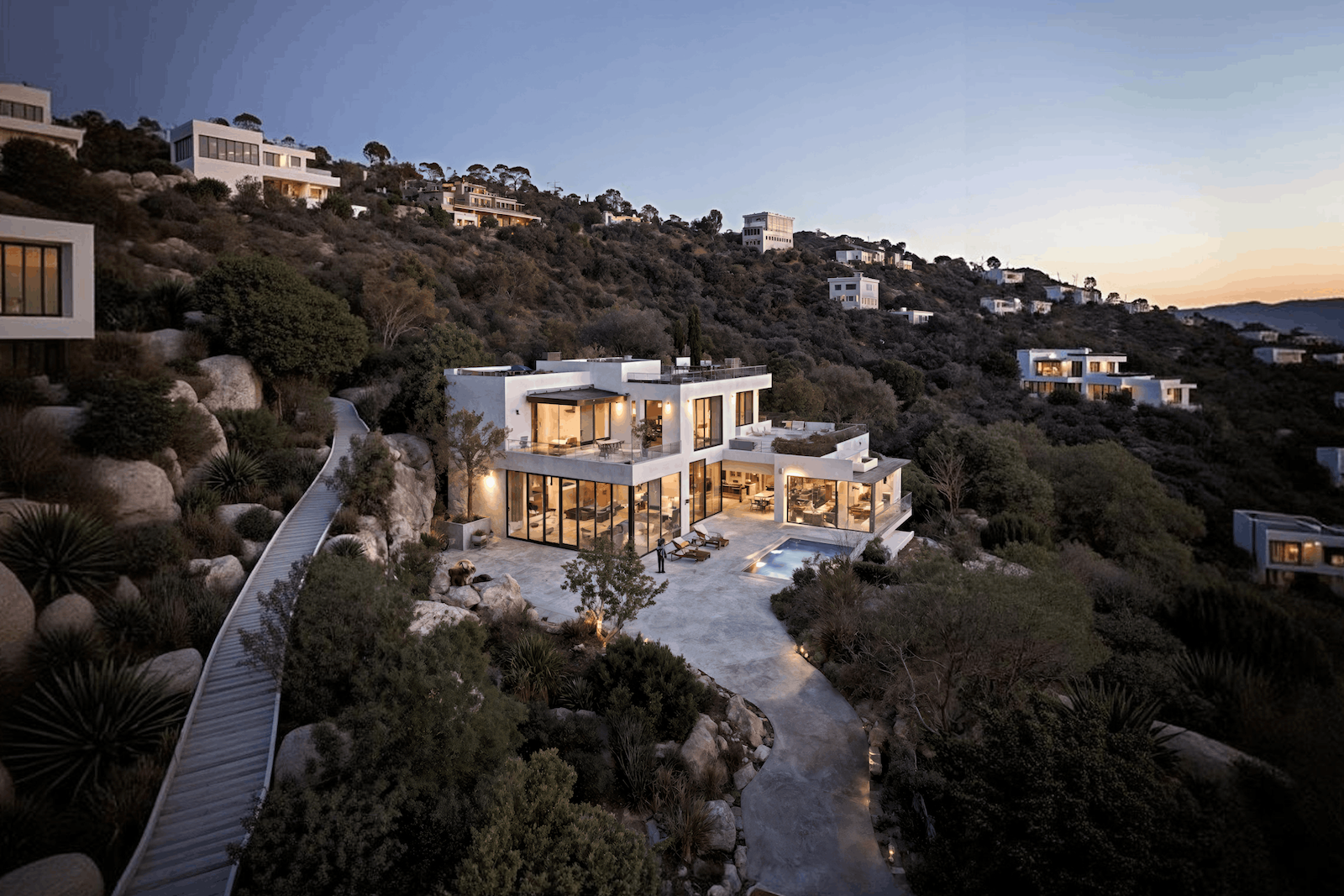
The visual language of villas de la costa has shifted dramatically over the past decade. Gone are the heavy Mediterranean revival styles with terracotta and ornate wrought iron. Today’s coastal villa architecture leans minimalist, with clean lines and massive glass panels that dissolve boundaries between interior and exterior spaces.
Three design philosophies dominate the 2026 landscape:
- Scandinavian Minimalism Meets Mediterranean Light: White stucco, natural wood accents, oversized windows, indoor-outdoor flow
- Contemporary Cubic Forms: Flat roofs, geometric precision, cantilevered terraces, integrated lighting
- Sustainable Modernism: Green roofs, solar integration, rainwater systems, natural ventilation
Property developers have learned that buyers purchasing villas de la costa prioritize views and outdoor living over interior square footage. The average new construction dedicates 45% of total property space to terraces, pools, and gardens, compared to just 28% a decade ago.
Materials and Finishes That Command Premium Prices
Coastal environments demand specific materials that withstand salt air and intense sun. Premium coastal villas now specify:
| Material Category | Standard Option | Premium Option | Price Impact |
|---|---|---|---|
| Window Systems | Aluminum frames | Minimal frame sliding glass | +18-25% |
| Flooring | Porcelain tile | Natural stone (travertine, limestone) | +12-20% |
| Pool Finish | Standard plaster | Glass mosaic or natural stone | +22-35% |
| Outdoor Kitchen | Basic BBQ setup | Full outdoor kitchen with pizza oven | +40-60% |
The outdoor kitchen category has seen explosive growth. In 2023, only 34% of coastal villas included dedicated outdoor cooking spaces. By 2026, that number jumped to 71%, with many featuring wood-fired ovens, wine refrigeration, and teppanyaki grills.
Investment Performance of Coastal Properties
Villas de la costa function differently as investment vehicles compared to urban apartments or inland estates. Rental yields average 4.2-6.8% for coastal villas in high-demand areas, but the calculation becomes more complex when you factor in seasonal variations and management costs.
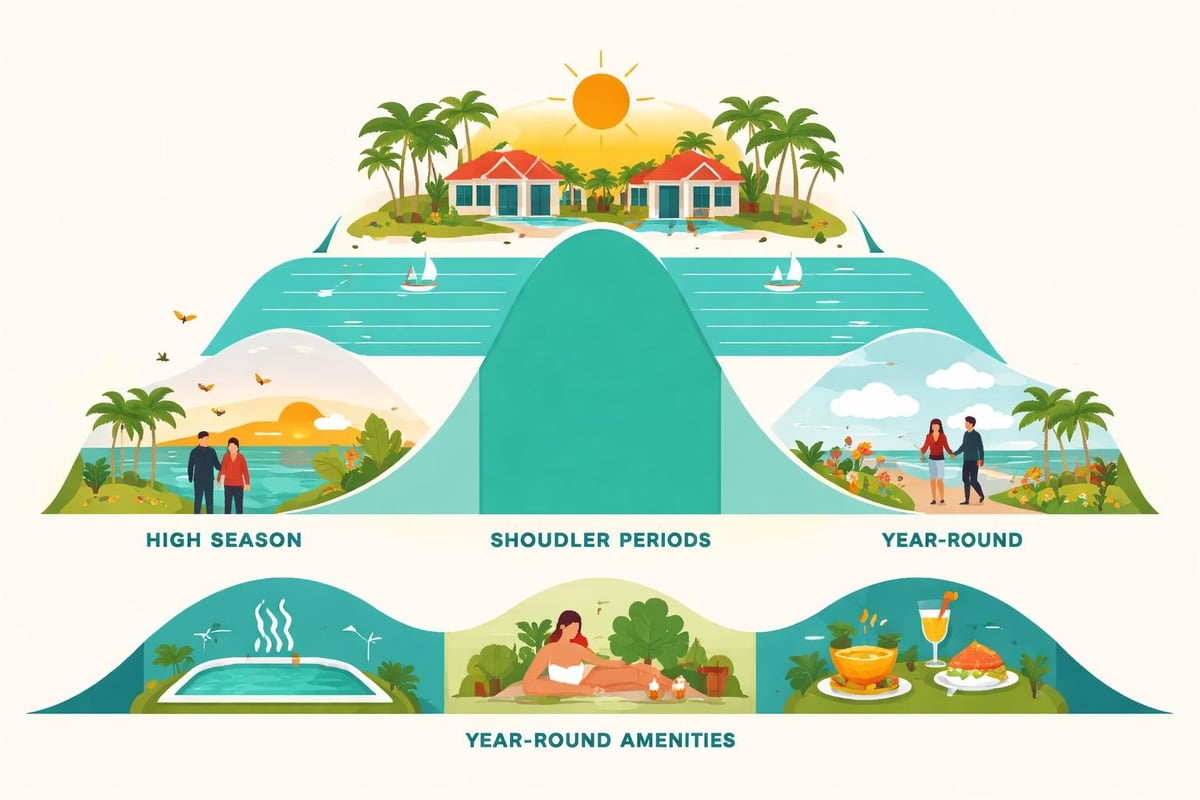
Marbella’s coastal villa rental market demonstrates these dynamics clearly. High season (June-September) commands rates 280-340% higher than low season (November-February). A villa renting for €12,000 per week in August might fetch €3,500 in January. Smart investors target properties with year-round appeal, incorporating heated pools, covered terraces, and proximity to golf courses that maintain steady winter demand.
The comprehensive property management services available through specialized providers have become essential for owners seeking to maximize returns while maintaining property standards. Professional management typically costs 18-25% of rental income but can increase occupancy rates by 30-45% through optimized pricing and marketing.
Short-Term vs. Long-Term Rental Strategies
The rental approach dramatically impacts overall returns. Consider these models:
Short-Term Vacation Rentals
- Gross yields: 5.8-8.2%
- Management intensity: High
- Seasonal volatility: Extreme
- Target guests: Tourists, luxury travelers
- Average stay: 4-10 days
Long-Term Residential Rentals
- Gross yields: 3.2-4.8%
- Management intensity: Low
- Seasonal volatility: Minimal
- Target guests: Executives, relocating families
- Average stay: 6-12 months
Hybrid Approach
- Gross yields: 4.9-6.7%
- Management intensity: Medium-High
- Seasonal volatility: Moderate
- Target guests: Mix of vacation and extended stays
- Average stay: Varies by season
Most sophisticated coastal villa investors now employ hybrid strategies, renting short-term during peak summer months while securing longer-term tenants for the October-May period. This approach smooths income while reducing the wear-and-tear associated with constant guest turnover.
Amenities That Separate Luxury from Standard
Every coastal property claims “luxury” status, but specific amenities create actual market differentiation. Analysis of villas de la costa selling in the top price quartile reveals consistent feature sets that buyers demand.
Infinity pools have become table stakes rather than differentiators. The real separation happens with pool technology: heating systems, salt electrolysis, automatic covers, and integrated spa features. Buyers in 2026 expect pools usable year-round, not just summer ornaments.
Climate control represents another critical division. Standard air conditioning doesn’t cut it anymore. Premium coastal villas install zone-controlled systems, often with smart home integration allowing remote management. Underfloor heating, once considered excessive for Mediterranean climates, now appears in 68% of new coastal villa construction, valued for winter comfort and the clean aesthetic of radiator-free walls.
Technology Integration Worth the Investment
Smart home systems have evolved from novelty to necessity in the luxury coastal villa market. The features that actually add resale value include:
- Automated lighting scenes that adjust based on time of day and occupancy
- Climate zone controls managing temperature across outdoor and indoor spaces independently
- Security integration combining cameras, motion sensors, and remote monitoring
- Entertainment systems with whole-house audio and automated outdoor cinema setups
- Irrigation management that adjusts watering schedules based on weather forecasts
Properties with comprehensive smart home integration sell 8-14% faster and command 5-9% price premiums over comparable non-integrated villas. The technology also reduces management headaches for rental properties, allowing remote troubleshooting and automated guest access systems.
Regional Variations in Coastal Villa Markets
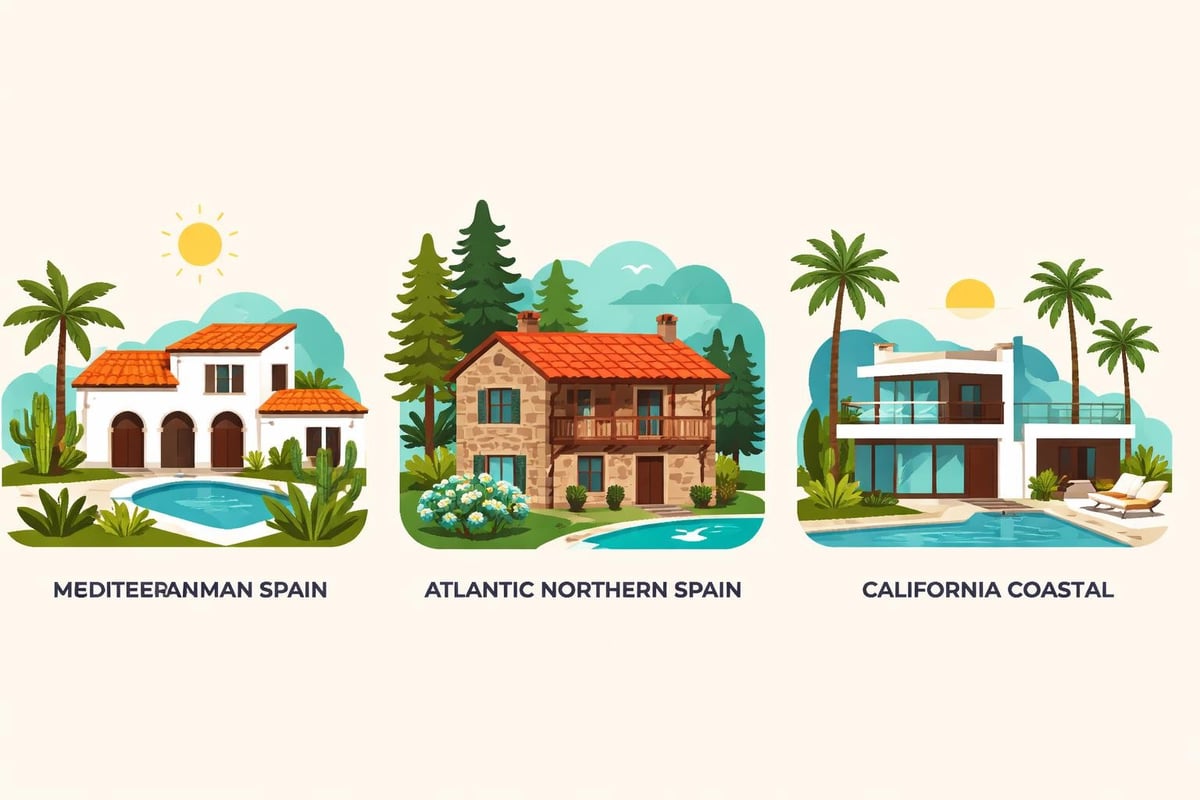
While the term villas de la costa applies broadly to coastal properties, regional markets exhibit distinct characteristics. The Hermandad de las Cuatro Villas historical region in northern Spain demonstrates how geography and culture shape property types differently than southern Mediterranean markets.
Northern Spanish coastal villas deal with dramatically different climate conditions, requiring robust insulation and heating systems that would seem excessive in Marbella. Architecture skews toward traditional stone construction with steep roofs designed to shed rain, contrasting sharply with the flat-roofed modernism dominating southern coasts.
California’s coastal villa market, including communities like Villas at La Costa in Carlsbad, operates under completely different regulatory frameworks. California Coastal Commission oversight restricts development and renovation options, creating supply constraints that drive prices higher while limiting architectural freedom.
Mediterranean Spain: The Gold Standard
Spain’s Costa del Sol region has emerged as the benchmark for luxury coastal villa development. The combination of 320 days of annual sunshine, established infrastructure, and relatively permissive building regulations created ideal conditions for the villas de la costa market to flourish.
Marbella specifically concentrates wealth and development expertise. The municipality contains over 4,200 coastal villas valued above €1 million, with roughly 180 new constructions completing annually. This mature market means buyers find everything from 1960s renovation projects to cutting-edge 2026 new builds.
The Golden Mile stretch between Marbella and Puerto Banús represents the apex of this market. Average villa prices there exceed €5.8 million, with beachfront properties regularly trading above €15 million. These aren’t just houses; they’re statements of arrival in global luxury property circles.
For those seeking that perfect balance of modern design and coastal living, properties like Villa Be Lagom in Benahavís exemplify what today’s sophisticated buyers expect: heated infinity pools, panoramic Mediterranean views across multiple terraces, and those design-forward touches like outdoor fireplaces that extend usable outdoor time into cooler months.
The Buyer Profile Evolution
Who actually purchases villas de la costa has shifted substantially over the past five years. The stereotype of retired northern Europeans seeking sunny retirement homes no longer dominates the market. Today’s coastal villa buyers break into distinct segments:
Remote Work Executives (28% of market)
Age 35-52, technology sector heavy, seeking year-round residence with home office space and reliable fiber internet. They value proximity to international airports and presence of international schools.
Multi-Property Portfolio Investors (31% of market)
Age 45-68, treat coastal villas as part of diversified real estate holdings. Prioritize rental income potential and management ease over personal use.
Lifestyle Upgraders (23% of market)
Age 55-72, selling primary residences in major cities to relocate permanently. Focus on quality of life, healthcare access, and established expat communities.
Ultra-High-Net-Worth Collectors (11% of market)
Age 40-75, purchasing fourth, fifth, or sixth properties. Price relatively insensitive, demand unique architectural statements and absolute privacy.
Opportunistic Buyers (7% of market)
Age varies widely, entering market during price corrections or distressed sales. Most price-sensitive segment, willing to compromise on location or condition.
Financing and Ownership Structures
International buyers often stumble over the mechanics of actually acquiring villas de la costa in foreign jurisdictions. Spanish coastal property purchases by non-residents require careful structuring to optimize tax efficiency and estate planning.
Most sophisticated buyers establish Spanish SL (Sociedad Limitada) corporations to hold properties. This structure provides liability protection and can simplify eventual property transfer to heirs. The setup costs run €2,500-4,500 but typically pay for themselves through tax optimization within 3-5 years.
Mortgage availability for coastal villas varies dramatically by buyer profile. Spanish banks will lend up to 70% LTV for Spanish residents but typically cap foreign buyers at 50-60% LTV. Interest rates for non-resident mortgages currently range from 3.8-5.2%, significantly higher than resident rates of 2.9-3.8%.
Hidden Costs That Catch Buyers Off-Guard
Purchase closing costs in Spain total 10-12% of property value, substantially higher than many international markets. The breakdown typically includes:
| Cost Category | Percentage | Based On | Notes |
|---|---|---|---|
| Transfer Tax (ITP) | 7-10% | Purchase price | Varies by region, new construction exempt |
| Notary Fees | 0.5-1% | Purchase price | Non-negotiable, regulated rates |
| Land Registry | 0.4-0.8% | Purchase price | Official property registration |
| Legal Fees | 1-1.5% | Purchase price | Attorney review and representation |
| Gestor/Agency | 0.5-1% | Purchase price | Administrative processing |
Ongoing annual costs add another layer. IBI (property tax) runs 0.4-1.1% of cadastral value, typically well below market value. Community fees for gated developments range from €150-800 monthly depending on amenities. Many coastal villa owners underestimate landscape and pool maintenance, which averages €400-700 monthly for professional service.
Design Elements That Define Coastal Living
The physical characteristics that make villas de la costa distinctive go beyond ocean proximity. Successful coastal architecture responds to specific environmental challenges while maximizing the natural advantages of waterfront locations.
Orientation becomes critical. South-facing properties capture maximum sunlight year-round, crucial for outdoor living and natural warmth during winter months. However, pure south exposure can create uncomfortably hot interior spaces during summer. The most sophisticated designs incorporate deep overhangs, automated exterior shading, and strategic landscaping to modulate solar gain.
Wind patterns demand equal attention. Coastal locations experience stronger and more consistent winds than inland areas, both an advantage and challenge. Smart designs channel breezes through properties for natural cooling while protecting outdoor dining and lounge areas from disruptive gusts. Glass windbreaks, strategic hedge placement, and recessed terrace designs all contribute to usable outdoor space regardless of wind conditions.
Landscaping for Coastal Environments
Gardens around villas de la costa face harsh conditions: salt spray, intense sun, irregular rainfall, and often poor soil quality. The trend has shifted away from water-intensive tropical landscaping toward Mediterranean-native and drought-tolerant species.
Successful coastal landscapes now incorporate:
- Olive trees for structure and silver-green color that complements modern architecture
- Lavender and rosemary for fragrance, low water needs, and purple accent color
- Agave and aloe varieties for sculptural focal points requiring zero irrigation
- Native grasses that move with coastal breezes and require minimal maintenance
- Bougainvillea for vibrant color against white walls, extremely drought-tolerant once established
The shift toward sustainable landscaping isn’t purely aesthetic. Water costs have increased 40% since 2020 in many Spanish coastal municipalities, and further restrictions seem likely as climate pressure intensifies. Properties with sustainable landscapes face lower operating costs and stronger appeal to environmentally conscious buyers.
Market Outlook and Investment Timing
Predicting coastal real estate markets involves reading multiple indicators simultaneously. Current data for villas de la costa suggests we’re in a consolidation phase following the explosive growth of 2020-2023, when coastal properties saw unprecedented demand from remote workers escaping urban lockdowns.
Inventory levels have normalized. After reaching historic lows in 2022 with just 2.3 months of supply in premium coastal areas, current inventory sits at healthier 4.7 months. This shift gives buyers more negotiating leverage without signaling market distress.
Transaction volumes tell an interesting story. While sales numbers decreased 18% from 2023 peak levels, average transaction values increased 7%. The market has bifurcated: mid-tier properties (€800k-2M) move more slowly while premium villas (€3M+) continue selling at strong pace. Ultra-luxury (€8M+) has actually accelerated, with 23% more transactions in this segment compared to 2023.
Interest rate sensitivity appears lower for coastal villas than other property categories. Even as mortgage rates climbed from historic lows, coastal villa sales held steadier than urban apartments or suburban homes. The explanation seems straightforward: coastal villa buyers rely less on financing and more on accumulated wealth or investment returns from other assets.
Finding the right coastal property requires understanding these market dynamics while also knowing which specific locations and property types align with your lifestyle and investment goals. Whether you’re seeking a vacation rental income stream or a permanent Mediterranean lifestyle upgrade, the villas de la costa market offers compelling opportunities for those who approach it with proper preparation. Priority Marbella specializes in matching discerning clients with exceptional coastal properties while providing the comprehensive management services that turn luxury villas into performing assets rather than maintenance headaches.