

Property Management Home Rentals: A 2026 Owner’s Guide
The rental market has split into two distinct camps: owners who treat their properties like ATMs and wonder why returns diminish, and those who understand that property management home rentals demand the same rigor as any business operation. Most second-home owners in destinations like Marbella don’t realize they’re competing against professionally managed portfolios where every detail-from thread count to check-in timing-has been optimized through years of data.
Why Most Rental Properties Underperform
Revenue isn’t just about nightly rates. A villa sitting empty for 40% of the year at premium pricing generates less than one booked 65% of the time at market rate. The mathematics seem obvious, yet property owners consistently overvalue their assets while underinvesting in the systems that drive bookings.
Professional property management home rentals incorporate dynamic pricing algorithms that adjust rates based on local events, competitor availability, seasonal demand curves, and even weather forecasts. A luxury villa in Marbella during the peak summer season might command €2,500 per night, but smart managers know that shoulder-season pricing at €1,200 with strategic marketing fills more calendar days than waiting for premium bookings.
The Real Cost of Self-Management
Owners often calculate management fees-typically 20-30% of rental income-as pure loss. They miss the opportunity cost entirely:
- Emergency maintenance calls at 2 AM from guests who can’t operate the pool heating system
- Revenue lost during personal use periods that could accommodate high-paying guests
- Cleaning standards that vary wildly between turnover days
- Missing market opportunities because you didn’t know a major golf tournament was scheduled
- Legal compliance gaps that expose you to liability
One property owner in Puerto Banús tracked his time investment over six months of self-management: 127 hours on guest communications alone, equivalent to €6,350 at even a modest hourly rate. His occupancy rate was 52%. After engaging professional property management home rentals services, occupancy jumped to 71% while his personal time investment dropped to under 8 hours monthly for ownership oversight.

Maintenance Systems That Preserve Asset Value
Reactive maintenance costs roughly 3x more than preventive schedules. A pool pump failure during guest occupancy requires emergency service rates, potential guest compensation, and review damage. The same pump on a quarterly inspection schedule gets serviced before failure for a fraction of the cost.
Premium property management home rentals establish documented maintenance calendars covering every system:
| System | Inspection Frequency | Typical Annual Cost (Villa) |
|---|---|---|
| HVAC Systems | Quarterly | €800-1,200 |
| Pool Equipment | Monthly | €1,400-2,000 |
| Garden/Landscaping | Weekly | €4,800-7,200 |
| Appliance Check | Monthly | €600-900 |
| Deep Cleaning | Per Turnover | €300-500 per event |
These aren’t optional expenses. They’re insurance policies protecting six or seven-figure assets from deterioration that compounds annually.
Technology Integration for Remote Owners
Smart home systems have evolved beyond novelty to operational necessity. Property managers now deploy integrated platforms that monitor:
- Water leak sensors in bathrooms and kitchens
- Energy consumption patterns that flag inefficient systems
- HVAC performance metrics that predict failures
- Security systems with real-time guest access logs
- Automated climate control based on occupancy schedules
One management company reduced emergency callouts by 64% after installing comprehensive monitoring systems across their portfolio. They caught a slow water leak in a guest bathroom two days before it would have damaged the bedroom below-saving approximately €8,500 in repairs and lost rental income.
Guest Experience as Competitive Differentiation
The difference between 4.2 and 4.8 stars on booking platforms isn’t marginal-it’s existential. Properties below 4.5 stars experience 40% fewer bookings at 15% lower nightly rates. Guest experience engineering isn’t about luxury amenities alone; it’s about eliminating friction at every touchpoint.
Check-in protocols reveal management quality immediately. Professional property management home rentals systems provide guests with detailed arrival instructions 48 hours before check-in, complete with parking details, WiFi credentials, appliance guides, and local emergency contacts. They assign specific time windows rather than vague afternoon ranges.
Pre-arrival touchpoints that drive reviews:
- Booking confirmation with property details and house rules
- Pre-arrival message 7 days out with local recommendations
- Check-in details 48 hours before arrival
- Welcome message 2 hours after check-in confirming everything is satisfactory
- Mid-stay check-in for stays longer than 5 nights
- Check-out instructions 24 hours before departure
- Post-departure thank you with review request
This communication cadence seems excessive until you realize it prevents 80% of common guest issues before they escalate to complaints.
Amenity Management That Justifies Premium Pricing
Luxury isn’t about having a pool-it’s about the pool being heated to 27°C exactly as promised, with crystal-clear water tested twice weekly and surrounding loungers cleaned daily. The margin between luxury and standard rental properties exists in reliability and presentation.
Consider offerings like the Villa Be Lagom, where features like a heated infinity pool with panoramic views aren’t just amenities but carefully managed experiences. The difference between a marketed feature and a delivered experience depends entirely on consistent property management oversight.


Financial Management and Owner Reporting
Transparency separates professional operations from amateur management. Monthly statements should detail every transaction: rental income by booking, cleaning costs, maintenance expenses, utilities, supplies, management fees, and net owner distributions.
Advanced property management home rentals platforms provide real-time financial dashboards where owners can check their property performance from anywhere. One Marbella owner reviews his villa’s metrics every Sunday morning from London: occupancy rates, average daily rate trends, upcoming bookings, recent expenses, and year-over-year comparisons.
Key performance metrics owners should monitor:
- Occupancy rate (booked nights ÷ available nights)
- Average Daily Rate (ADR)
- Revenue Per Available Night (RevPAN)
- Total expenses as percentage of gross revenue
- Net Operating Income (NOI)
- Return on Investment (ROI) including property appreciation
Most self-managed properties track only occupancy and gross income, missing efficiency metrics that reveal whether they’re optimizing returns. A property with 60% occupancy at €2,000 ADR generates the same gross revenue as one at 75% occupancy and €1,600 ADR-but the higher occupancy property typically incurs fewer per-night costs and builds better review momentum.
Regulatory Compliance in Shifting Markets
Spain’s rental regulations have tightened considerably since 2024, particularly around short-term vacation rentals. Municipalities now enforce strict licensing requirements, occupancy limits, noise ordinances, and tourist tax collection. Non-compliance risks fines starting at €3,000 and potential rental prohibition.
Professional property management home rentals services maintain current knowledge of local regulations across different municipalities. What’s permitted in Marbella differs from Benahavís, and coastal areas face stricter rules than inland properties. According to Property Management Insight’s overview of rental regulations, staying compliant requires active monitoring of changing ordinances.
Insurance and Liability Protection
Standard homeowner policies don’t cover short-term rental activities. Specialized vacation rental insurance addresses:
- Guest injury liability
- Property damage beyond security deposits
- Lost income from covered perils
- Host liability for guest injuries to third parties
Annual premiums typically range from €1,200-2,400 for luxury villas, depending on property value and coverage limits. This isn’t optional protection-it’s fundamental risk management for assets regularly occupied by strangers.
Marketing and Distribution Channel Strategy
Listing on Airbnb alone no longer suffices. Optimal distribution requires presence across multiple platforms, each with different fee structures, audience demographics, and booking patterns:
| Platform | Commission Rate | Primary Audience | Booking Lead Time |
|---|---|---|---|
| Airbnb | 3% host + 14% guest | Leisure travelers | 14-45 days |
| Booking.com | 15-18% host | International tourists | 30-90 days |
| Vrbo | 5% host + 8% guest | Family groups | 45-120 days |
| Direct bookings | 0% | Repeat guests | 60-180 days |
Channel diversification protects against algorithm changes on any single platform. One property manager saw Airbnb bookings drop 30% after a search algorithm update in late 2025-but total occupancy only declined 8% because Booking.com and direct bookings compensated.
Professional photography isn’t negotiable. Properties with professional images book at rates 2.3x higher than those with smartphone photos, according to platform data. This includes twilight exterior shots, styled interior photography, and aerial drone footage for properties with compelling grounds or views.
Content Strategy Beyond Listings
Property management home rentals that excel in organic bookings maintain content beyond basic listing descriptions. They create:
- Dedicated property websites with SEO optimization
- Instagram accounts showcasing the property and surrounding area
- Email marketing to past guests with seasonal promotions
- Blog content about local attractions and events
- Video walkthroughs posted across social platforms
A Marbella villa portfolio manager invested €3,200 in content development during 2025 and tracked €18,700 in direct bookings attributable to organic discovery-a 485% return that compounds as content continues attracting visitors.
Staffing and Service Provider Networks
Quality property management home rentals depend on reliable service provider networks. The best managers cultivate relationships with vetted professionals across essential services:
- Cleaning teams with hospitality-grade standards
- Maintenance contractors available for rapid response
- Landscaping services maintaining weekly schedules
- Pool technicians conducting regular chemical balancing
- Concierge partners arranging guest experiences
Consistency matters more than individual quality. A cleaning team that delivers 8/10 results every time outperforms one that alternates between 9/10 and 6/10 quality. Guests notice variability and mention it in reviews.
One manager maintains three backup cleaning teams beyond his primary contractor-ensuring turnover never delays because a team called in sick. This redundancy costs nothing until it prevents a same-day booking cancellation worth €1,500.
Technology Platforms Streamlining Operations
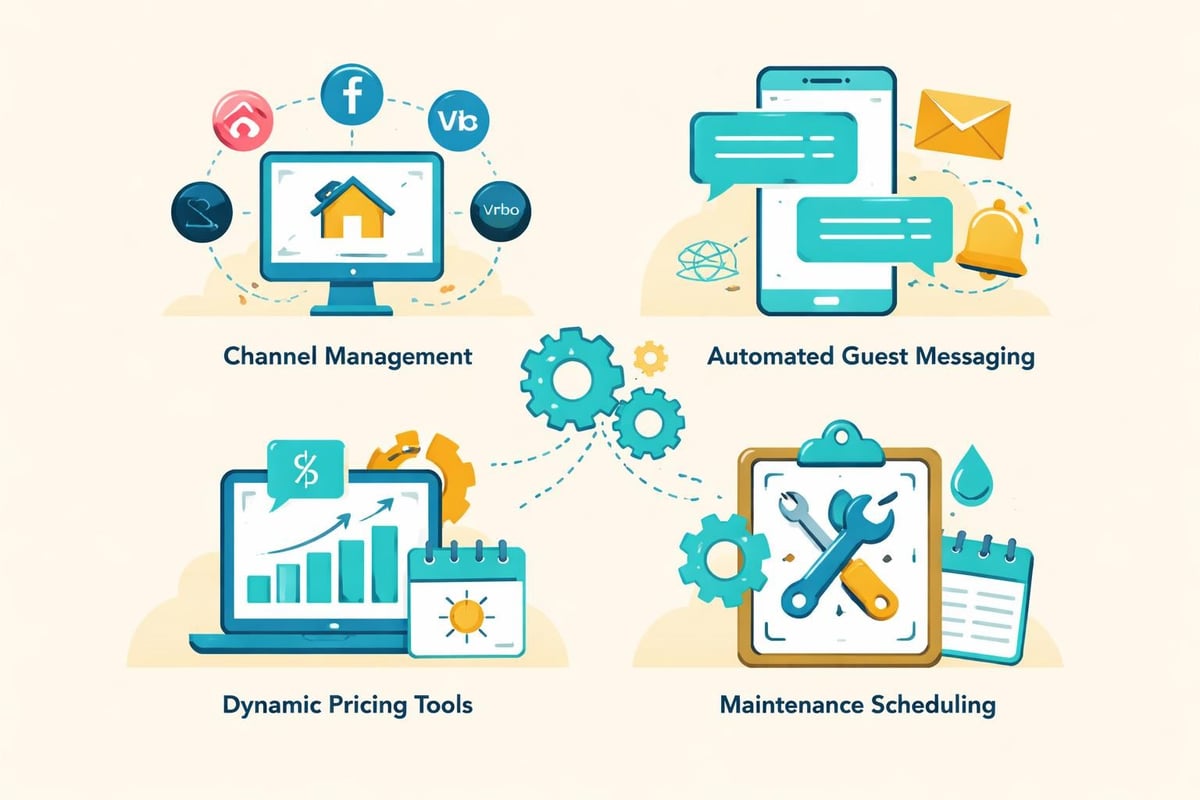
Manual management collapses at scale. Even single-property owners benefit from platforms that automate routine tasks:
- Channel managers synchronizing availability across booking platforms
- Automated messaging sending templated communications at trigger points
- Smart locks providing unique codes for each guest reservation
- Digital guidebooks replacing printed materials with interactive information
- Revenue management software adjusting pricing based on market conditions
According to Zillow’s property management resources, technology adoption correlates directly with profitability metrics across rental portfolios.
The initial learning curve intimidates some owners, but modern platforms have simplified interfaces designed for non-technical users. Most property managers report technology adoption paying for itself within three months through time savings and revenue optimization.
Long-Term vs. Short-Term Rental Strategies
Market conditions in 2026 favor strategic flexibility. Pure short-term vacation rentals generate higher gross revenue but incur greater operational costs and vacancy risk. Long-term rentals provide stable income with minimal management overhead but lower absolute returns.
Sophisticated property management home rentals adapt strategies seasonally. A Marbella villa might operate as short-term vacation rental from May through October, then shift to monthly rentals during winter months when vacation demand softens. This hybrid approach optimizes revenue across the calendar year.
Comparative annual performance (luxury 4-bedroom villa):
- Pure short-term strategy: €95,000 gross revenue, €32,000 operating costs, 58% occupancy
- Pure long-term strategy: €48,000 gross revenue, €8,500 operating costs, 100% occupancy
- Hybrid strategy: €78,000 gross revenue, €21,000 operating costs, 74% equivalent occupancy
The numbers vary by property and market, but the principle holds: flexibility captures opportunity across market segments.
Building Direct Booking Momentum
Every booking platform charges commissions-money that comes directly from owner profits. Building a direct booking channel eliminates these fees while creating guest relationships the owner controls.
Repeat guest rates average 23% for well-managed vacation rentals, according to industry data. These repeaters book directly, arrive knowing exactly what to expect, cause fewer issues, and often stay longer. One property manager tracked his repeat guest cohort: they spent 18% more per booking and generated 4.7x fewer support requests than first-time guests.
Direct booking strategies include:
- Offering 10-15% discounts for direct reservations
- Collecting guest emails during stays for future marketing
- Creating a simple booking website with online payment processing
- Maintaining past guest communication with seasonal updates
- Incentivizing reviews that mention your direct booking option
The initial reliance on platforms like Airbnb is necessary for visibility, but the long-term goal should be converting platform guests to direct bookers. One Marbella property reduced platform dependence from 87% to 41% of bookings over three years, saving approximately €14,200 annually in commission fees.
Owner Expectations and Communication Protocols
Misaligned expectations destroy property management relationships faster than performance issues. Clear communication protocols established upfront prevent 90% of owner-manager conflicts.
Professional property management home rentals agreements specify:
- Minimum guaranteed occupancy rates or no guarantees at all
- Response time commitments for different issue severities
- Expense approval thresholds (e.g., repairs under €500 don’t require approval)
- Reporting frequency and format
- Property access for owner personal use with advance notice requirements
- Management fee structure including any performance incentives
Some managers offer tiered service levels where owners choose between full-service management and oversight-only arrangements. Full-service includes guest communications, cleaning coordination, maintenance management, and supplies replenishment. Oversight-only provides booking management and financial reporting while owners handle operational details.
The right fit depends on owner involvement preference and location proximity. Owners living locally might prefer oversight-only arrangements, while international owners typically need comprehensive service.
Market Positioning and Competitive Analysis
Your property competes within specific market segments defined by location, size, amenities, and price point. Understanding your competitive set matters more than generic market trends.
A 3-bedroom villa in Nueva Andalucía competes differently than a 6-bedroom estate in La Zagaleta. Analyzing comparable properties reveals positioning opportunities:
- What amenities do competitors offer that you lack?
- Where are you priced relative to similar properties?
- What do competitor reviews praise or criticize?
- How do competitor photos and descriptions present their properties?
- What booking minimums do they enforce?
Tools like AirDNA and Transparent provide competitive market data showing supply levels, occupancy trends, and pricing benchmarks. One property manager discovered his client’s villa was underpriced by €300 per night compared to equivalents-leaving €27,000 on the table over a summer season.
Regular competitive analysis should inform strategic decisions about renovations, amenity additions, and marketing positioning. Kiplinger’s guide to rental platforms highlights how different channels attract distinct traveler segments, requiring tailored positioning strategies.
Renovation and Upgrade ROI Calculations
Not all improvements generate equivalent returns. Kitchen and bathroom updates typically deliver 70-90% ROI in increased booking rates. Home theater systems might return 20%. Smart property management home rentals services advise owners on improvements that drive measurable revenue increases.
High-impact upgrades for vacation rentals include:
Immediate ROI (12-18 months payback):
- Professional interior styling and staging
- Outdoor entertainment areas with quality furniture
- High-end bedding and linens
- Smart home climate control systems
Medium ROI (24-36 months payback):
- Pool heating systems extending season length
- Kitchen appliance upgrades to luxury brands
- Bathroom renovations with modern finishes
- Outdoor shower installations
Low ROI (48+ months payback):
- Home gyms with commercial equipment
- Wine cellars and tasting rooms
- Extensive automation systems
- Purely aesthetic architectural changes
The numbers shift based on property tier. Luxury villas justify higher-end amenities that wouldn’t make sense for mid-market properties. A €45,000 outdoor kitchen renovation might be essential for villas commanding €3,000+ nightly rates but excessive for properties at €800 per night.
Risk Management Beyond Insurance
Financial protection extends beyond insurance policies. Comprehensive risk management includes:
- Security deposit structures that discourage damage while remaining competitive
- Rental agreements with clear damage liability terms
- Pre-arrival and post-departure property documentation with photos
- ID verification for all booking guests
- Noise monitoring systems for neighborhood protection
- Guest screening based on reviews and booking patterns
Some managers refuse same-day bookings or local reservations-both correlated with higher damage incidents. Others require minimum stay lengths during peak seasons to reduce turnover frequency and associated wear.
One property management company analyzed 847 guest stays and found that bookings made within 48 hours of check-in had 4.2x higher damage claim rates than those booked 30+ days in advance. They implemented a 72-hour minimum booking window and reduced damage incidents by 61%.
Seasonal Strategy Adjustments
Markets like Marbella experience dramatic seasonal demand fluctuations. Summer weeks book at premium rates nine months in advance. Winter weeks might sit vacant unless strategically priced for golf tourists, digital nomads, or extended-stay guests.
Effective property management home rentals adjust strategies across seasons:
Peak Season (June-September):
- Premium pricing with minimum stay requirements
- Strict cancellation policies
- Limited discounts or promotions
- Focus on family travelers and luxury seekers
Shoulder Season (April-May, October-November):
- Moderate pricing with flexibility
- Target golf tourists and couples
- Offer value-adds like complimentary experiences
- Reduce minimum stay requirements
Off Season (December-March):
- Competitive pricing for longer stays
- Market to remote workers and winter escapees
- Consider monthly rental options
- Invest in property maintenance and upgrades
Properties that maintain static pricing across seasons leave massive revenue on the table. Dynamic seasonal strategies optimize the property’s appeal to different traveler segments as market conditions shift.
Property management home rentals success in 2026 demands treating your asset like the business it is-with systems, metrics, and professional oversight that amateur approaches can’t match. Whether you’re looking to maximize returns on a luxury villa or ensure your second home receives five-star care during your absence, Priority Marbella delivers comprehensive management services that transform properties into consistently performing rental assets across both short and long-term markets.